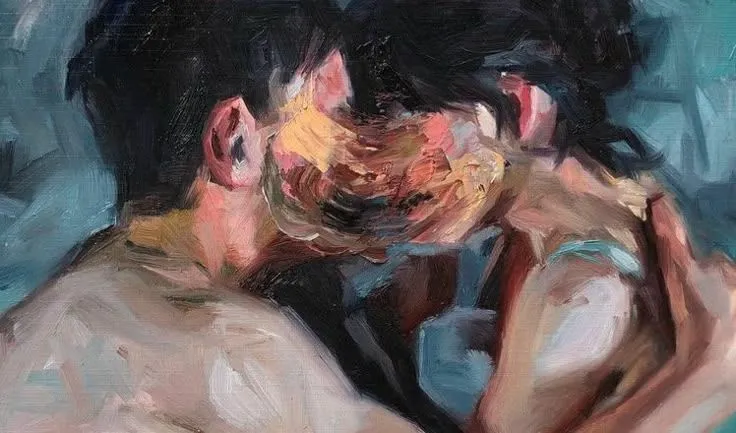
Avoid Pain = Avoid Happiness
I once knew someone who stopped listening to music after a breakup. Not just the songs they'd shared with their ex, but all music. Every genre, every artist, every melody. Because music, they said, felt too much like feeling, and feeling had become synonymous with pain. Six months later, they told me something that stopped me cold: "I'm not sad anymore. But I'm not anything either."
They'd successfully built walls high enough to keep the heartbreak out. But in doing so, they'd also locked out joy, wonder, and the very aliveness that makes life worth living. They were safe. They were numb. They were surviving but not living. They are just existing in a carefully controlled emotional flatline where nothing could hurt them, but nothing could move them either.
So, when my father died, it was very timely that I saw a quote that said, "Grief is just love with nowhere to go." I hated it immediately. It sounded like a greeting card trying to make something unbearable sound poetic. Like someone who's never experienced real loss trying to package devastation into something pretty and shareable. I wanted to tear it up, burn it, and scream at whoever wrote it that they had no idea what they were talking about. But the more I sat with it, through the sleepless nights, the random waves of tears in grocery stores, bus trips on the way home, and the moments when I'd reach for my phone to call him before remembering he was gone. The more I realized it contained a truth I didn't want to face: the size of your grief is directly proportional to the size of your love. I realized that if I wanted to avoid this crushing, suffocating, world-ending pain, I would have had to avoid loving my father this deeply. I would have had to keep him at arm's length, guard my heart, and hold back. I would have had to love him less to hurt less now. And of course, I wouldn't trade a single second of that love—not for all the pain-free days in the world.
So what do we do with this impossible truth? How do we live knowing that everything we love can be taken away? That everyone we care about will eventually leave or die? That every dream we chase might not come true? That opening ourselves up means getting hurt, again and again and again? We do it anyway. We love anyway. We hope anyway. We dream anyway. We stay open anyway. We feel everything anyway. Not because we're masochists who enjoy pain, but because the alternative—the numbness, the safety, the emotional death—is so much worse than any pain we might encounter. I'd rather sob in my car over a loss than feel nothing at all. I'd rather have my heart broken by someone I loved than never risk loving anyone. I'd rather fail at something I cared about than succeed at something that doesn't matter. I'd rather feel too much than not enough. Because the pain passes, but the numbness doesn't. Grief transforms. Heartbreak heals. Disappointment fades. But if you shut yourself down, if you close those doors, if you choose safety over aliveness—that becomes permanent. That becomes your whole life.
Because remember that friend who stopped listening to music? They eventually started again. Slowly at first—a song in a coffee shop that made them pause. Then a playlist. Then an entire album, windows down, volume up, tears streaming down their face. And they told me, "I forgot what it felt like to be moved by something. I thought I was protecting myself, but I was just disappearing." It’s evident that the music came back. The feeling came back. And yes, sometimes a song still reminds them of their ex, and it stings. But mostly, music is just music again—beautiful, cathartic, essential.
It is also evident that the door that let the pain in is the same door that let the joy back through, indeed.