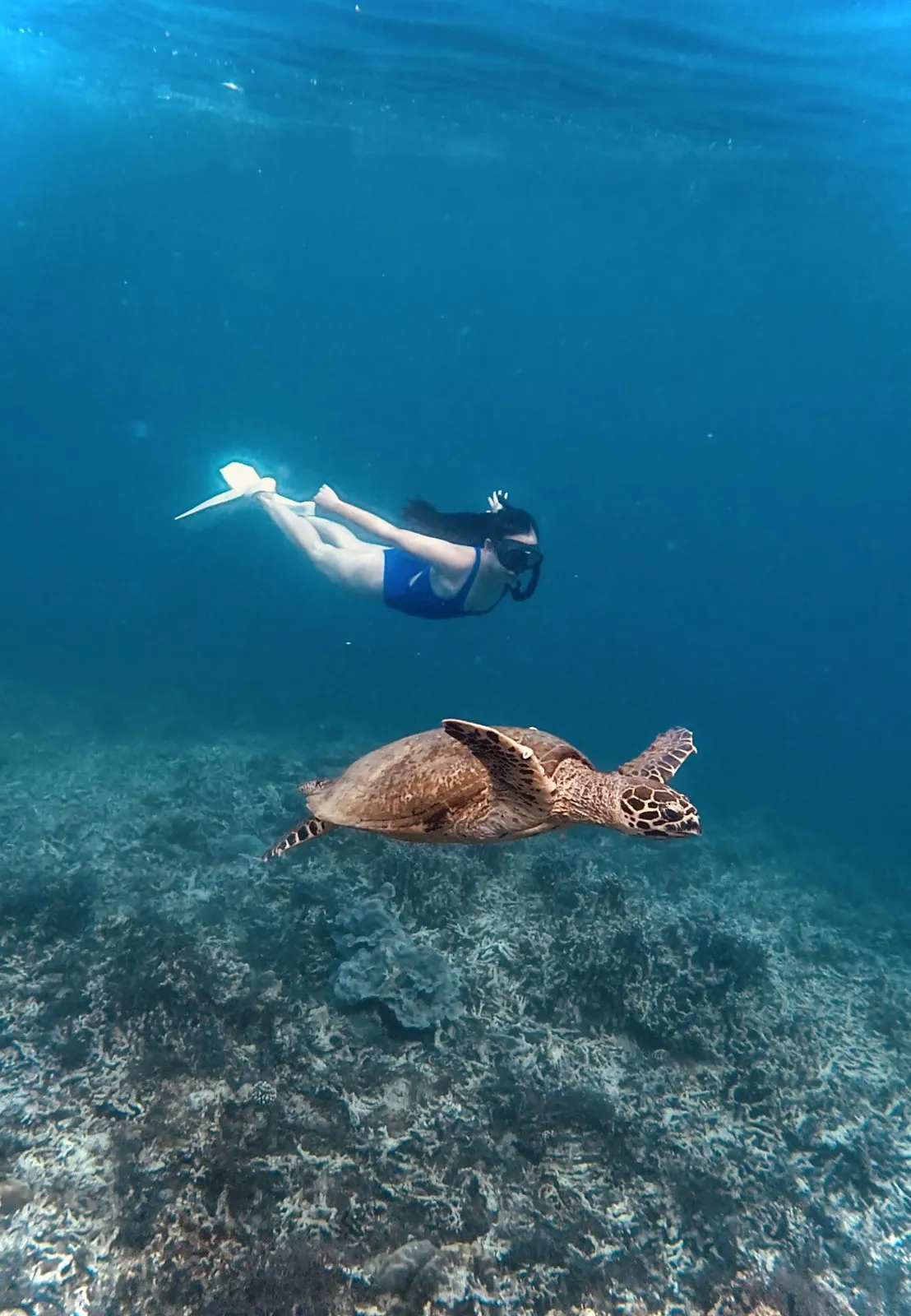
What Freediving Taught Me
As a panic swimmer, I never thought the ocean could teach me stillness.
I went freediving alone. Well, not entirely alone—I joined as a solo traveler with a group of strangers who would become temporary companions in the water. But I arrived by myself, signed up by myself, and showed up by myself. It was my first time doing something like this without a safety net of familiar faces, and honestly? It felt terrifying and liberating in equal measure. What a way to start 2026, right? At first, I wasn't sure I could do it. I'd seen the videos, bodies gliding effortlessly into the blue, disappearing into depths that seemed impossible for human lungs. I'd heard the stories, picked up tips here and there about duck dives and equalization. But watching and doing are oceans apart, aren't they?
There's always a right way to do things, and freediving is unforgiving of shortcuts. Right equalizing. Right finning. Right positioning. Get one wrong and your body reminds you immediately—pressure in your ears, burning in your chest, panic creeping at the edges of your calm. But there was something thrilling about learning it properly, about understanding that the ocean isn't something to conquer but something to move with. That you don't fight your way down—you surrender your way down. And from the moment I learned the fundamentals, I knew this wouldn't be a one-time adventure. This would become something I'd return to again and again, chasing that feeling I didn't even know existed yet.
So here's what they don't tell you about freediving: descent is the easy part (well, at least for me). With proper equalization, you can sink deeper and deeper, the water welcoming you, gravity doing half the work. There's a peace in the descent—a trust in the process, a letting go. You're moving away from air, from safety, from everything your survival instincts scream at you to cling to. And yet, it feels natural. But the ascent? That's where fear lives. That's when your lungs start burning. When your body starts sending urgent messages to your brain: We need air. Now. When the surface that looked so close suddenly feels impossibly far. When every kick requires willpower, when every second stretches into eternity, when you have to fight the urge to panic and just trust that you'll make it. The ascent is where you learn what you're made of.
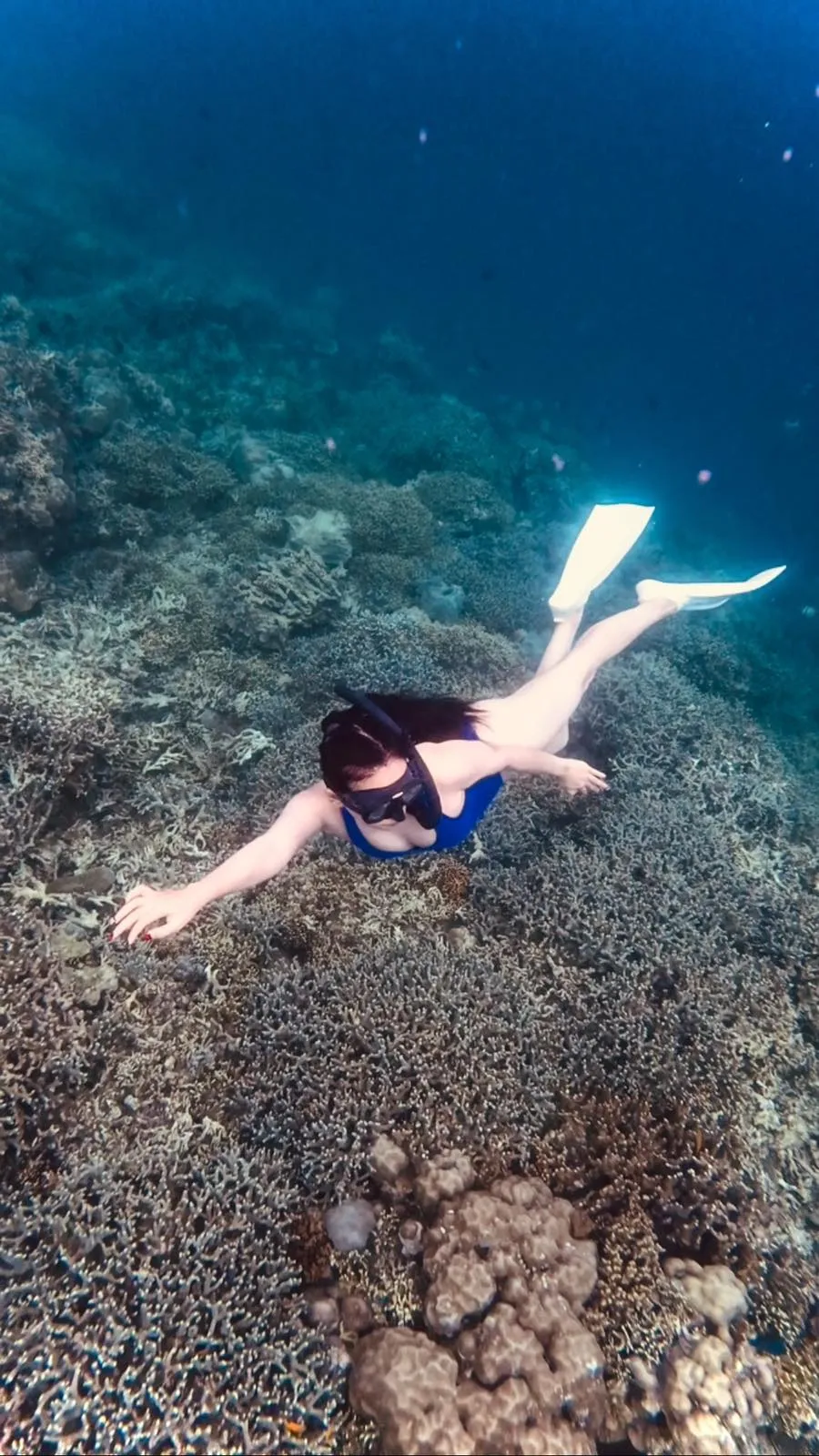
But here's the thing, the most important lesson freediving taught me has nothing to do with technique. It's this: listen to your body, or the ocean will make you listen. You might want to go deeper. Your ego might push you, whispering that you can make it to twenty feet, thirty feet, beyond. The water might be so clear, so inviting, pulling you down like a siren song. But if your body says stop—if your ears won't equalize, if your chest tightens, if something feels wrong—you stop. No argument. No negotiation. You stop. Because the ocean doesn't care about your ambitions. It doesn't care about your Instagram post or your personal best. It will humble you in seconds if you don't respect it. This isn't a sport where you push through pain. This is a practice where you learn the difference between challenge and danger, between growth and recklessness, between courage and stupidity.
Freediving taught me more than how to hold my breath or equalize my ears. It taught me that calmness isn't the absence of fear—it's the presence of trust. Trust in your training. Trust in your body. Trust in your ability to surface, to breathe, to survive. It taught me that letting go feels like falling until it feels like flying. That surrendering to the water is the only way to move through it gracefully. It taught me that limits are real, and respecting them is strength, not weakness. That knowing when to stop is just as important as knowing when to push. It taught me that silence has depth. That the quietest moments can be the most profound. That sometimes you have to descend into the deep to find the parts of yourself that get lost in the noise of daily life. And finally, it taught me that solo doesn't mean lonely. That showing up for yourself, doing something brave and new without a familiar hand to hold, is its own kind of companionship. That you can meet strangers in the water and share something wordless and beautiful.
But most of all, it taught me that the things that scare us often hold the most peace.
I surfaced from that first dive with salt on my lips and something shifted in my chest. A new kind of breath and a new kind of knowing. I'd gone down as a panic swimmer—someone who thrashed against the water, who saw it as an adversary. However, I came up as someone who understood that the ocean wasn't something to fight. It was something to listen to. Something to move with. Something to respect.
And in learning to be calm in the water, I learned something about being calm in life: that sometimes you have to sink into the discomfort to find the stillness. That sometimes you have to hold your breath through the hard parts to reach the surface. That sometimes the scariest descents lead to the most transformative ascents. Sixteen feet under, I found a quiet I'd been searching for my whole life.
And I can't wait to go deeper.
Here's to anyone considering freediving: Do it. Respect the ocean. Listen to your body. Find a good instructor. And let the water teach you what dry land never could.